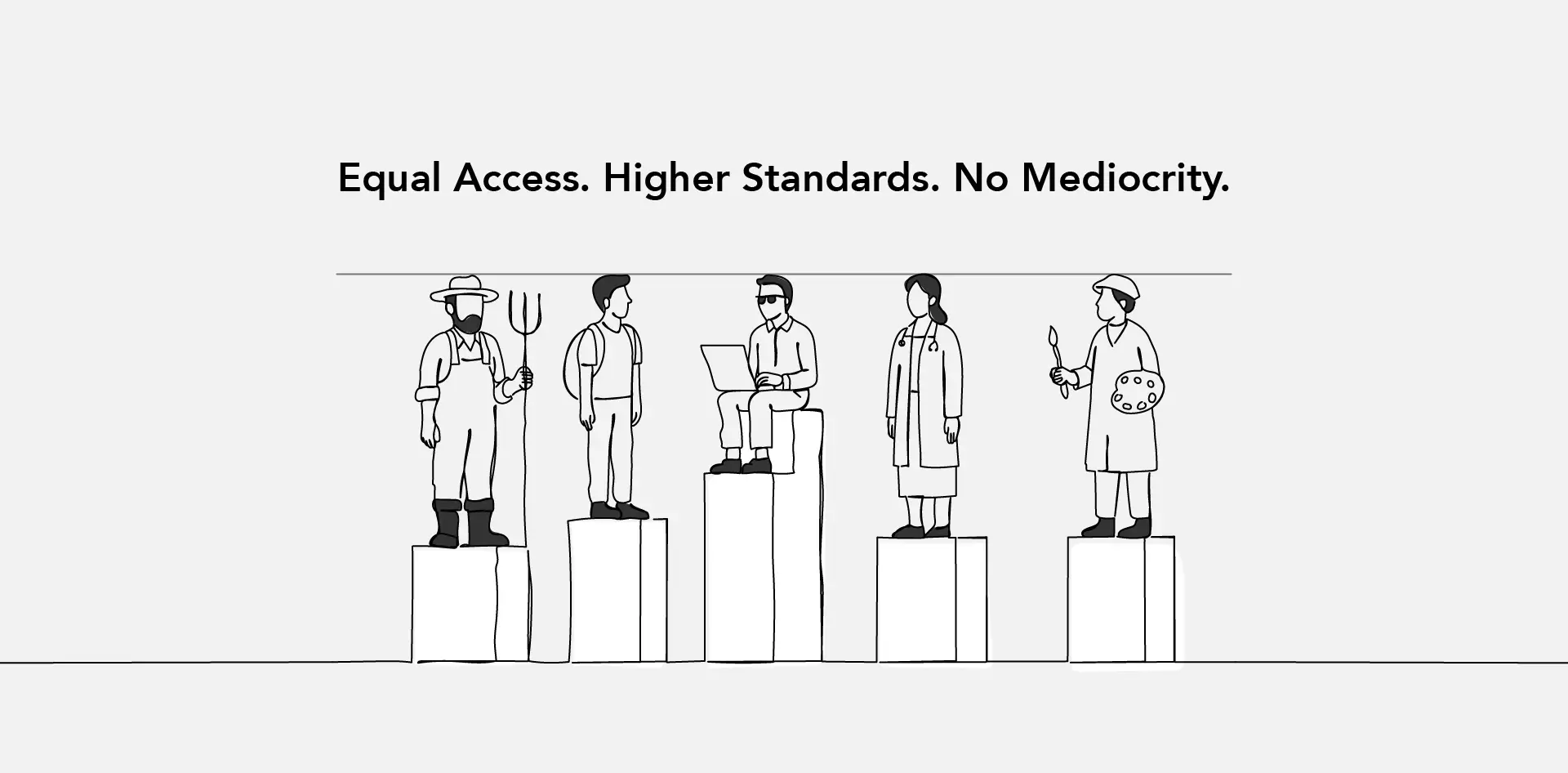
When “Better” Stops Being Visible
AI is not changing agencies by making work faster or cheaper. It is changing them by resetting what clients quietly expect as normal.
When execution tools become universal, improvement stops being a signal. Work that once felt strong blends into the middle, not because it declined, but because the baseline moved. Agencies still deliver. Clients still receive. Yet the work no longer proves expertise on its own.
This is where confusion starts.
Teams respond by polishing execution, tightening processes, and doing more. None of that restores leverage. The issue is not quality. It is comparison. Value is now judged relatively, not absolutely.
The risk is subtle and structural. Agencies are not being replaced by AI. They are being repriced by sameness.
And most don’t realize it until pricing power has already thinned.
The Assumption That AI Advantage Comes From Speed
Myth
If we execute faster and cheaper with AI, we gain an edge.
Reality
Speed only creates advantage when others cannot match it.
AI removes that condition.
What agencies experience as momentum is often just temporary separation. As similar tools and workflows spread, speed becomes assumed. Clients stop noticing how quickly work arrives and start evaluating whether it feels meaningfully different from what they see elsewhere.
This is not a tooling issue. It is a market effect.
Harvard Business Review has noted that generative AI advantages become table stakes once widely adopted, eliminating speed as a durable differentiator.
Speed changes expectations faster than it creates leverage.
When Everyone Improves at the Same Time
Universal access to AI does not lift a few agencies above the rest. It lifts everyone together.
When improvement is evenly distributed, variance collapses. Execution quality tightens into a narrower band where “good,” “very good,” and “great” feel interchangeable to clients comparing options side by side.
This is why agencies feel pressure without an obvious cause.
Agency Core data shows that agency leaders operate under constant pressure to differentiate while managing delivery, sales, hiring, and client expectations simultaneously. When execution becomes indistinguishable under strain, that pressure compounds instead of easing.
California Management Review explains how AI makes prior competitive advantages easier to replicate, compressing differentiation across markets.
What disappears first is not quality. It is contrast.
Baseline Inflation And The Disappearance Of “Good”
The Baseline Inflation Model explains what agencies are experiencing but struggling to name.
What Baseline Inflation Means In Practice
Baseline inflation occurs when the minimum acceptable standard rises faster than perceived value. Work improves, but its ability to signal expertise declines because the reference point has moved.
Clients are not demanding more explicitly. They are comparing more implicitly.
Why “Good” Stops Registering
As AI-assisted execution becomes common, “good work” blends into what is expected. It remains functional and acceptable, but it no longer proves competence or differentiation on its own.
Wharton research on the AI efficiency trap shows how productivity gains often increase expectations instead of relief, raising the baseline for everyone simultaneously.
Baseline inflation does not punish bad work.
It neutralizes good work.
Earlier Market
Current Market
Differentiation Band
Baseline 20% Requirement
Market Evolution
Earlier Market
Good work clearly signals expertise.
Deliverables Still Work But They Stop Proving Value
The Deliverable Signal Decay Curve explains a pattern agencies often misinterpret as a quality issue.
Utility And Signaling Are Not The Same
Deliverables can continue to function perfectly while losing their ability to signal expertise. Clients still receive what they asked for. Outcomes may even improve. But the work no longer differentiates because similar outputs are easy to find elsewhere.
This is where confusion starts. Agencies receive positive delivery feedback yet feel pricing pressure and shrinking patience.
This is why conversations about value increasingly move beyond the brief and into what agencies actually contribute, not just what they deliver.
When Outputs Become Comparable
Agency Edge research reinforces this tension. Clients rate agencies higher than in-house teams on quality, yet still compare agencies against each other on perceived value. When work feels interchangeable, loyalty weakens quickly.
Peer-reviewed research on AI-driven democratization in content marketing agencies shows how generative AI redistributes creation capability, reshaping agency–client dynamics and accelerating sameness.
Deliverables lose signaling power before they lose usefulness.
When Deliverables Stop Proving Value
Deliverables can keep working even after they stop differentiating.
Time Line Earlier Stage
Deliverables both work and signal expertise.
Utility
How well the deliverable functions or performs
Remains stable or slightly improves over time.
Signaling Value
How strongly the deliverable communicates expertise or differentiation
Declines as similar outputs become common.
Deliverables lose signaling power before they lose usefulness.
Why Mediocrity Is No Longer A Skill Problem
Mediocrity in an AI-assisted market is not caused by weak talent or low effort. It emerges from unchanged value models.
Common failure modes include:
- Treating improvement as differentiation
- Over-rotating on output volume
- Misallocating senior judgment
This is amplified when AI adoption happens informally, without shared standards or governance, accelerating sameness before agencies realize it.
That pattern is already visible in how agencies handle shadow AI and its hidden risks to differentiation, especially when tools outpace strategic intent.
Agency Core data shows agencies struggle when execution quality becomes inconsistent or indistinguishable under capacity strain. Agency Edge findings add that agencies delivering only “good work” are often seen as replaceable within weeks of dissatisfaction.
Mediocrity is a value-model failure, not a talent failure.
The Quiet Signals Agencies Miss First
Baseline inflation rarely announces itself through lost clients. It shows up earlier, in quieter ways.
Early signals include:
- Faster client approvals paired with thinner engagement
- Increased price sensitivity without explicit dissatisfaction
- Shorter renewal conversations and fewer strategic questions
- Requests framed around speed and cost instead of outcomes
Agency Edge research shows that clients often exit relationships because work no longer meets expectations—even when deliverables remain technically sound. What erodes first is confidence, not performance.
At the same time, client-side behavior is shifting openly. Reporting on brands using generative AI to reduce marketing production costs shows how expectations reset long before agencies feel direct revenue impact.
By the time churn appears, pricing power has already weakened.
Where Human Value Still Compounds
The Judgment Stack Framework clarifies where human value persists after AI-assisted execution becomes common.
Execution Is The Base Layer
AI accelerates production. That layer matters, but it no longer signals expertise on its own. When execution improves everywhere, it becomes assumed.
Judgment Sits Above Output
What still compounds is judgment applied before, during, and after execution—framing the problem, integrating constraints, anticipating risk, and making tradeoffs visible. This is where agencies prove value that cannot be copied by prompts.
This shift aligns with how agencies build authority when execution parity emerges. Value moves toward authority positioning that clients trust beyond deliverables, not toward producing more of them.
Governance and reliability matter more as output scales. Guidance from the AI Risk Management Framework reinforces why judgment and oversight—not volume—protect trust as AI use spreads.
Judgment compounds where execution plateaus.
Where Value Compounds When Execution Plateaus
As execution becomes assumed, value moves upward.
Why Execution Partners Matter More In A Raised-Baseline Market
As the baseline rises, agencies face a tradeoff they didn’t before. Either senior talent stays buried in production, or execution becomes reliably delegated so judgment can move upstream.
This is why execution partners matter more when execution becomes table stakes.
Reliable delivery absorbs volume without absorbing attention. It stabilizes output so agencies can reallocate senior thinking to framing, integration, and client decision-making—the layers that still signal value.
This is the strategic role of partnerships that help agencies move beyond commoditized execution without adding overhead.
The shift is not about outsourcing more work. It is about protecting where human leverage still exists.
Delegated execution protects judgment capacity.
The Cost Of Sameness Arrives Quietly
AI does not make agencies worse. It makes comparison harsher.
When the baseline rises, good work stops standing out. Deliverables still function, but they no longer prove value. Pricing pressure appears before revenue drops. Confidence thins before churn shows up.
This is why the real risk is not obsolescence. It is commoditization through sameness.
Agencies that adjust where value is created—away from output and toward judgment—retain leverage as expectations reset. Those that don’t keep improving execution and wondering why it no longer protects them.
The difference is not effort. It is alignment with how value is now judged.
Questions Agencies Start Asking When “Good” Stops Working
FAQs
Why Does Our Work Keep Improving But Pricing Conversations Feel Harder?
Because improvement is no longer scarce. Clients evaluate value comparatively, not absolutely. When similar-looking work is everywhere, leverage erodes even if quality rises.
If Clients Aren’t Complaining, How Do We Know This Is Happening?
Baseline inflation shows up quietly—shorter patience, thinner engagement, and faster comparisons. By the time dissatisfaction is explicit, pricing power has already weakened.
Is This Just Another Commoditization Cycle Agencies Have Seen Before?
It’s different in speed and scope. AI compresses execution variance across the entire market at once, not gradually or category by category.
Does This Mean Execution Quality No Longer Matters?
Execution still matters operationally. It just no longer signals expertise on its own. Utility persists. Differentiation doesn’t.
Where Does Human Value Actually Show Up Now?
In judgment—how problems are framed, risks anticipated, tradeoffs named, and decisions integrated across context. That layer compounds when output plateaus.
Why Do Agencies Feel Busier Even When Tools Make Work Faster??
Because rising expectations absorb efficiency gains. Faster delivery raises the bar instead of creating breathing room.