Founder Logs #38 · Part of Binary and Beyond. LinkedIn newsletter edition follows.
A software estimate risk is easy to hide inside a round number. Six weeks, two engineers, a catalog, an order form, and a line that says ERP sync. I have sat in the meeting where both sides repeated that number back, nodded, and left holding different silences. The integer was shared. The risks were not. The next time those people met, they called the difference a slip.
The number was the residue. The estimate was the set of risks someone was willing to say out loud before the residue was allowed to travel.
The parts counter that was "six weeks"
This scene is a composite, not a client story. The shape is familiar.
An equipment dealer group wants parts ordering on a screen before a trade show. A regional agency holds the relationship and the date. They ask for a login for counter staff and for dealers, search across the catalog, a price, an availability flag, a way to place the order, and sync with the ERP. The estimate comes back as six weeks. Each line has a shape the team has shipped before: a search box, a price field, a file that arrives at night, an order row in a database the team owns.
Under the lines, the work is an argument about which number a person at the counter is allowed to trust.
Availability in the ERP is a nightly extract. The counter promises a part the extract still shows on the shelf, and the shelf has already moved. The part number printed on the diagram is often not the part number the warehouse will pick. A dealer amends the order after someone has walked into the aisle. A core return, the old unit coming back, changes the price after the order exists. A national account does not pay the price on the screen, and someone is allowed to override it. The happy path is a search. The production path is which of those facts the screen is permitted to be wrong about, and who carries the cost when it is wrong (The Difference Between Shipping Code and Shipping Value, Enterprise Software Is Mostly Negotiation).
The proposal prices the search. The weekday morning prices the promise the counter makes with the search open.
Six weeks is a duration for the screens. The agency hears a date that protects the trade show. The dealer hears a counter that can stop checking the other system. The delivery team hears a file they have parsed before. When the estimate never records which of those hearings won, the first argument during the build decides it, and that argument arrives as a change request.
Why the number looked responsible
A number is easy to defend in a room. A list of conditions feels like reluctance, especially when the quarter is thin and the trade show invitations are already with the printer. People who have been punished for uncertainty learn to arrive with an integer and a calm voice.
The substitute that looks like maturity is a percentage on the bottom of the sheet. It names nothing. The first surprise spends it, and that surprise is rarely the expensive one. The catalog file is late, the percentage is gone, and supersession arrives with no sentence that said one physical part might have two identities. The room calls that a slip. It was the estimate, on the day it could no longer change the date.
"We will discover it in sprint two" meets the risk without a payment rule. Discovery that cannot move a date, narrow a promise, or stop the work is a recognition you can no longer act on.
An agency cannot wait until every part identity is mapped before someone starts. The line that matters is which risks sit inside the number because someone on the team has already been wrong about them, and which risks may reopen the number. A percentage does not draw that line. A sentence does.
When nobody can name the failure the team would be holding on the morning after the trade show, the honest output of the meeting is sometimes a refusal, or a smaller yes, rather than a thicker percentage (Why We Sometimes Say No to Projects).
Three lists, then a number
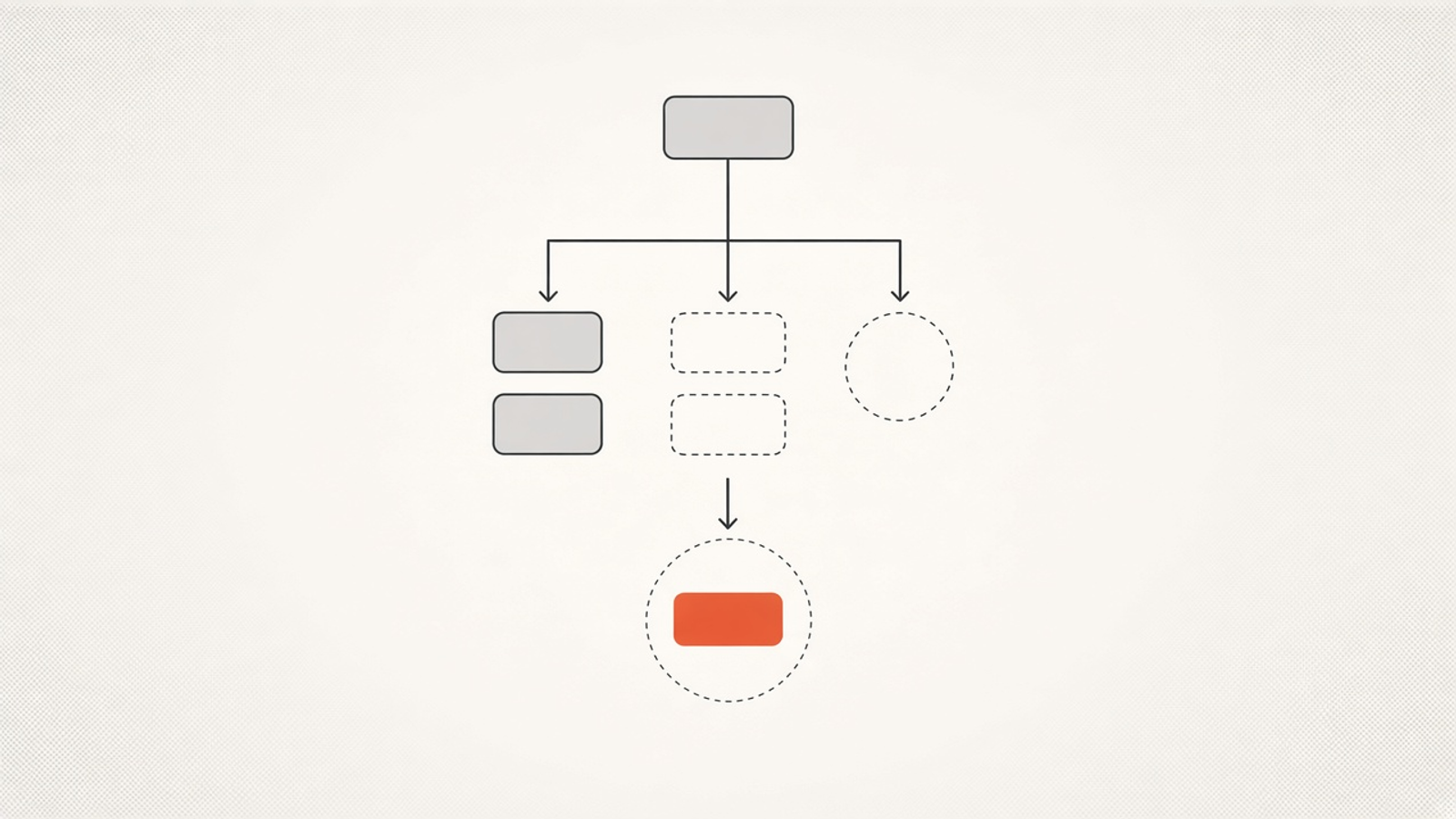
Before I trust a duration, I want three lists. The number is the last line. It earns a place only after the lists exist. One number standing in for all three is how a company sells a date and inherits an argument it did not price.
Inside the number. Work in a shape someone on this team has already been wrong about, and has corrected. Search against a nightly file you have parsed. A login. An order row in a table you own. These can carry a duration because the shape of being wrong is known, including the correction, not only the afternoon the file arrives clean.
Named outside the number. A condition in one sentence, a consequence you will accept, and a person who may declare that the condition has arrived. If the part on the diagram is not the part the warehouse picks, the date reopens, and the counter supervisor says so. A buffer is a number with no noun. A named risk has a noun, a consequence, and a name beside it.
Unnamed. Everything each side assumed the other was holding. The agency assumed sync meant the nightly file. The dealer assumed the counter could promise today's shelf. The delivery team assumed a part number was a part. Nobody wrote the assumption down, so nobody brought a rule for who pays when it is false. The list is invisible. That is not the same as empty. When an item on it arrives, it wears the costume of a slip or of scope creep. The item was in the work the whole time. It was never in the estimate.
The number on the proposal is what those three lists leave behind. When the third list is doing the holding, both sides can repeat a fiction in good faith, and good faith is not a control. A percentage does not promote a risk from unnamed to named. The days get spent. The silence waits.
What the proposal shows, and what the estimate holds
| The proposal shows | The estimate holds |
|---|---|
| Six weeks, two engineers | A duration for search, price display, and an order row |
| Availability on the screen | A nightly extract, which is not the shelf the counter promises |
| ERP sync | A file with an owner, or a meaning of "available" nobody has written down |
| Part search | One identity per part, unless supersession is named outside the number |
| A contingency percentage | Days with no noun, spendable by the first surprise |
| The trade show as the deadline | A date that cannot move, tied to risks that were never given a consequence |
The right-hand column is the estimate. A review that reads only the left has agreed a calendar. The work is the right-hand column. When those cells are blank, the blank is an assignment. It lands on whoever is still in the room when the condition shows up (Why Most Digital Transformation Projects Stall).
How unnamed risk arrives looking like a slip
The early weeks can look like a healthy estimate. The login exists. The file parses on a sample. Standup is short. The trouble stays quiet, which is why it survives until the date is too close to still be a decision.
- The nightly file is late in the third week, and the contingency goes to chasing a vendor. The file was never the availability a counter promises a dealer standing at the desk. That risk had no name, so it cannot be late against a plan. The percentage bought a chase.
- Search "returns the wrong part." The ticket lands on the screen. The screen matched the string it was given. The diagram number and the warehouse number are two identities for one object, and the estimate had room for one. A bug report is the unnamed list finding a form that engineering tools will accept.
- A dealer amends an order after the part is in someone's hand. The walkthrough still feels saveable, so the amendment is labeled scope. The person who walks into the aisle was not in the estimating meeting. Their absence was priced at zero.
- The trade show stays put. Amendments and core returns are cut and called phase two. Phase two is the unnamed list, renamed once it was no longer allowed to touch the integer. What ships was inside the number all along. The promise the dealer heard loses its sponsor the week the show succeeds.
A nightly file on a screen can be the right first release, when every listener heard "nightly file" and nobody heard "the shelf, today." The harm begins when one number is allowed to stand for both. The integration line was an endpoint and a file. The risk lived in the meaning of available, and the meaning of a part number, across a counter, a diagram, and a warehouse. Those meanings are the contract. A sync task that does not name them is a task with the shape of a hope (Data Contracts Matter More Than APIs).
What has to be on the software estimate risk list?
Ask these questions before a duration is allowed to leave the room. They are a gate on the word estimate. Clear answers mean the number is what remains after named choices. Fog means you have a calendar. Say calendar, and staff a calendar, until the fog lifts.
- Which risks are inside the number because someone on this team has already been wrong about them, and had time to correct the shape? Name the person and the last time. A duration with no such person is a guess in a schedule's clothes.
- Which risks sit outside the number? For each one, write the condition, the consequence (the date moves, the promise narrows, or the work stops), and the person who may declare that the condition has arrived.
- What did each party assume the other was holding? Write the sentence in their words. If you cannot write it, the risk is unnamed. A percentage at the bottom of the sheet does not cover a sentence you could not produce.
- What does the number buy: a date for a screen, a date for a behavior someone will stop, or a date for a decision you have not made? A screen date is a real commitment. A counter that has stopped opening the other system is a different one.
- If available, part number, or price can mean two things and the number still stands, that field was never estimated. It was a word both sides were free to keep.
- Who pays when a named risk resolves the expensive way? "We will see" saves the argument for a worse week. The estimate is where that argument was supposed to end.
- What would make you refuse to put a number on this at all? If nothing would, the page is a sales document. It can be decent. It should not be the plan the team is staffed against.
When the lines that name the person, the condition, and the payment have to be invented, the number is an invention too. A trade show invitation should not be the author.
Six weeks for search, a price taken from the nightly file, and an order a person retypes into the ERP, with today's shelf and supersession written outside the number, is an estimate a counter supervisor can argue with. Six weeks for "parts ordering, integrated" is a slogan with a calendar. The slogan wins the meeting. The aisle is where the calendar loses.
Implications for how you estimate
Write the lists before the number. The integer is the last line on the page. If the meeting has room for one artifact, send the lists and hold the integer back. An integer with no lists is what people forward, and the forward is how a silence becomes a commitment.
Attach every spare day to a noun. Four days if the cross-reference between diagram numbers and warehouse numbers is a sheet one person maintains: that slack can be defended. A percentage on the total leaves no record of what it was for, and the first surprise, usually the cheap one, spends it.
Put the person who has been wrong in the room where the number is born. The counter supervisor. The warehouse lead who knows which diagram lies. The engineer who has watched a column change meaning between plants. A happy-path room will add a week and call that conservatism. Conservatism is a named condition with a person beside it.
Start the known work without pricing the open risks by silence. Tasks inside the number can begin while named risks stay open, if the people who heard the number know what it refuses to cover. The date moves, the promise narrows, or the work stops, and that choice is written while the invitations can still be reprinted. A phased yes shares a spine with a clean refusal. Both decline to let a silence wear a date. One of them still lets catalog search start on Monday.
Leave a sentence that can reopen the number. The person named on the risk is the one who may say the condition arrived. If only the delivery team may say the estimate was wrong, the client hears an excuse. If only the client may say the scope moved, the team hears a target that walks. An estimate that goes mute at kickoff was a cover sheet, and cover sheets do not govern Tuesdays.
A counter will still override a national-account price, and someone should be allowed to. An override with no name, priced at zero, sits inside a number the trade show has made immovable. Name it, or keep it out of the sentence you use when you say how long the work takes.
The fingerprint
The number on the proposal is not the estimate.
The estimate is the list of risks you were willing to say out loud, and the rule for who pays when one of them comes due.
An empty list is not a conservative number. It is a silence that will arrive later, wearing a change request.
Related reading
- The Difference Between Shipping Code and Shipping Value
- Why We Sometimes Say No to Projects
- Enterprise Software Is Mostly Negotiation
- Data Contracts Matter More Than APIs
- Why Most Digital Transformation Projects Stall
Founder Logs #38 · Part of Binary and Beyond. LinkedIn newsletter edition follows.